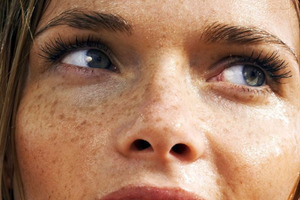
You've heard it countless times—you shouldn't pop pimples. But what makes this habit so dangerous?
What happens when you pop pimples yourself?
- You damage blood vessels and capillaries, which leads to the formation of red or bluish stagnant spots that are especially noticeable in cold weather.
- You damage your skin. When you squeeze the contents of a pimple through a tiny pore opening, even if you've pricked the pimple with a needle, the pressure literally tears the skin. As a result, a small or noticeable scar forms in that spot.
- Given that the pressure also damages blood vessels, the pus doesn't just come out—it also enters the bloodstream and spreads across your face through the capillaries.
- Often, a pimple that has been popped leaves behind post-inflammatory hyperpigmentation, or, simply put, a dark spot.
What should you do if a pimple appears?
- First, you need to wait for the inflammatory process in the sebaceous gland to fully end.
How do you know when it's ready?
- It's quite simple: lightly touch the pimple.
If it's completely painless, the inflammatory process is over. And if there's a small, dry whitehead on the surface, you can carefully remove it. You'll probably accidentally catch and scratch it with a towel anyway.
- Before removing it, you must wash your hands. Cleanse the skin around the pimple with any disinfectant.
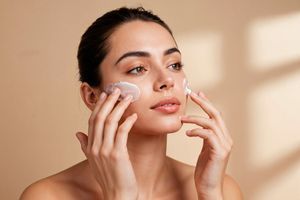
- Then, using cotton pads soaked in disinfectant and wrapped around your fingers, carefully remove the dried whitehead without pressing hard on the skin.
If the pimple is painful, you must not touch it under any circumstances.
A painful pimple should be treated twice a day with an antiseptic, anti-inflammatory product, such as a 1-2% solution of salicylic acid, which can be bought at any pharmacy. Continue this until the inflammation subsides and the pimple becomes painless.
Try some skincare products that will help you care for your skin even better:
Expert complexes for oily facial skin care