· What is it?
SELF-TANNING IS AN OPPORTUNITY TO GET THE DESIRED GOLDEN TAN,
WITHOUT EXPOSING YOUR SKIN TO DANGER OR PROVOKING PHOTOAGING PROCESSES
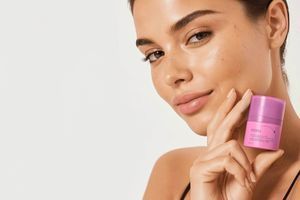
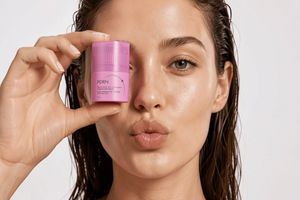
Under the influence of self-tanning, the skin changes color by itself. Hillary self-tanner contains 2 components for tanning and prolonging the effect at once - dihydroxyacetone (a substance extracted from cane sugar) and erythrulose (raspberry sugar).
Dihydroxyacetone (DHA), a monosaccharide in such products, triggers a chemical reaction that causes the top layer of skin to become darker.
This process is somewhat similar to the formation of a brown crust when baking brown bread.
Usually, the reaction triggered by dihydroxyacetone takes 3 to 5 hours (depending on the DHA content and the specifics of the formula), so you will have to wait a little bit for the final result.
Erythrulose (raspberry sugar) is a natural compound used in tanning cosmetics and bronzers.
This is the substance that provides a stable, long-term, soft and even tan of various shades of brown.
Erythrulose performs a dual function in cosmetics: it is not only a persistent bronzer, but also an effective sunscreen component. Raspberry sugar is considered a safer ingredient than the more common dihydroxyacetone, but it is exactly this combination that allows you to get an even natural tan that will stay on the skin for up to 7 days even without renewal.
Another advantage of self-tanning is that it can be used during pregnancy, as the product stops at the level of the horny layer of the skin, which naturally exfoliates over the next 2 weeks.
As with other products and procedures, you need to be careful, but it's safer than tanning beds and ultraviolet light, which, combined with hormonal changes, can cause hyperpigmentation in pregnant women.
Do I need to protect my skin from the sun after self-tanning?
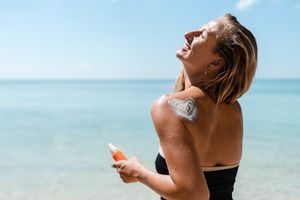
A darker skin tone does not mean that you don't need to protect your skin from UV radiation.
After using self-tanners, some people relax and start to neglect the sunscreen or reduce the protection factor to a minimum SPF 8 or 10.
This is wrong: self-tanning does not affect the synthesis of melanin and does not prevent the aggression of sunlight, so you need to protect your skin just as carefully.
In summer, if you plan to spend a long time in the sun, it is better to choose a sunscreen with SPF 30 or even 50.
· How to prepare your skin for self-tanning?
To make sure that self-tanning does not cause an allergic reaction, do a preliminary allergy test on a small area of skin.
The day before applying self-tanner, you need to scrub.
Before applying, be sure to use a scrub or exfoliator to free the skin from dead skin cells, take a shower, and wait for the skin to dry.
· How to apply self-tanner correctly?
The basic rule is not to overdo it with the amount of product.
It's better to repeat the procedure in a few days than to lubricate the skin with a thick and uneven layer.
· Apply the product to the body in a thin, even layer.
· Let it soak in.
· To make the tan appear faster, it is better to do the application procedure immediately after a shower, when the skin is still wet.
Apply with a glove applicator to prevent hand staining.