Author: Anastasiia, Cosmetic Formulation Technologist at HiLLARY Cosmetics
You wash your hair in the morning, but by evening your roots already look greasy. The next day, you have to wash it again or tie it into a ponytail. Dry shampoo has become a permanent fixture in your bag.
The short answer: if your hair gets greasy quickly, it is rarely because you are not washing it properly. Your scalp produces more sebum than necessary, and aggressive daily cleansing can make the problem worse. The scalp responds to excessive oil removal as a signal and may compensate by producing even more sebum.
Below, we explain how the scalp works, explore seven common causes of oily roots, provide a self-assessment table, and show you what to change starting with your next wash.
How the Scalp Works and Why It Needs Sebum 
The scalp is skin just like the skin on your face, but it has one of the highest densities of sebaceous glands on the body. Each hair follicle has its own gland, which produces sebum, or natural skin oil.
Sebum is not the enemy. It serves three important functions:
- Forms a protective film that helps prevent moisture loss from the skin.
- Maintains the skin's slightly acidic surface environment, supporting a balanced scalp microbiome.
- Lubricates the hair as it emerges from the follicle, making it more flexible.
The problem is not the presence of sebum but an excess of it. When the sebaceous glands become overactive, oil spreads quickly through the roots, causing strands to clump together, lose volume, and look greasy within just a few hours.
Here's the key point that changes everything: excess sebum is a response, not a fixed condition. Hair care habits influence it, which means you can often improve the situation by adjusting your routine.
Why Does Hair Get Greasy So Quickly? 7 Common Causes
- Overly Aggressive Cleansing. This is the most common and one of the most manageable causes. Shampoos containing harsh surfactants can strip away lipids until your hair feels almost squeaky clean. The scalp may respond to this disruption of its protective barrier by increasing sebum production to compensate for the loss. The more frequently and aggressively you wash, the sooner your roots may become greasy.
- Hormonal Fluctuations. Sebaceous gland activity is directly influenced by androgens. This is why oiliness can increase during puberty, in the second half of the menstrual cycle, during pregnancy, and after discontinuing hormonal contraceptives.
- Stress. Elevated cortisol levels may influence sebum secretion. During periods of increased stress, your roots may become greasy more quickly, even if your hair care routine remains unchanged.
- No Dedicated Scalp Care. Shampoo stays in contact with your scalp for just 30–60 seconds before being rinsed off. For the rest of the day—and for the next 24–72 hours—the scalp receives no dedicated treatment. This is the period when oiliness can become noticeable, making leave-in scalp care a useful addition to your routine.
- Buildup of Sebum and Styling Products. Dry shampoo, hairspray, mousse, and dead skin cells can accumulate on the scalp, leaving behind residue. This buildup may make thorough cleansing more difficult and leave your scalp feeling coated, even immediately after washing.
- Applying Conditioner or Hair Masks to the Roots. Products designed for the lengths of your hair often contain conditioning agents and fatty alcohols. Applied directly to the roots, they can weigh the hair down, reduce volume, and make it look greasy sooner.
- Mechanical Factors. Frequently touching your hair, wearing tight hairstyles or hats, and sleeping on an unwashed pillowcase can contribute to oil and residue spreading along the hair shaft, making your hair look less fresh.
How to Identify the Cause of Your Oily Roots
|
What you notice |
Possible cause |
What to change |
|
Roots become greasy by the evening of wash day |
Excess sebum production + an overly harsh shampoo |
Switch to gentler cleansing + add sebum-regulating care between washes |
|
Greasy roots but dry ends |
Shampoo applied along the entire length or a mask applied to the roots |
Apply shampoo to the scalp only and conditioning products to the lengths |
|
Residue and heaviness even immediately after washing |
Buildup of sebum and styling products |
Use a scalp exfoliating treatment once a week, if tolerated |
|
Oiliness accompanied by flakes |
An imbalance in scalp condition |
Targeted care for specific concerns |
|
Oiliness worsens during the second half of the menstrual cycle |
Hormonal fluctuations |
A consistent regimen, rather than one-off treatments |
|
Oiliness increases after a stressful period |
Cortisol |
A 3-month course; do not expect results in a week |
|
No root volume from the moment you wake up |
Heavy products applied to the lengths or roots |
Review how and where you apply conditioner |
Several causes often occur at the same time. In these cases, a comprehensive approach works best: adjust your washing technique and add appropriate care between washes.
Why Cleansing Alone Is Not Enough: What Is Sebum Regulation?
When we have oily facial skin, we do not try to solve the problem by washing our faces with soap five times a day. Instead, we choose skin care that helps regulate oil production while maintaining hydration. The same principle applies to the scalp – we are simply less accustomed to treating it this way.
Sebum regulation does not mean stripping the skin of oil. It means helping the scalp maintain a healthier balance rather than repeatedly removing too much oil and compromising its protective barrier.
From a formulation perspective, leave-in products offer an advantage: shampoo works for less than a minute before being rinsed away, whereas a scalp serum remains on the skin until the next wash.
Which Active Ingredients Should You Look For?
- Salicylic Acid (BHA) is oil-soluble, allowing it to penetrate into pores and help remove excess sebum and dead skin cells. It is particularly useful in formulations designed to address scalp buildup.
- Zinc PCA combines zinc with pyrrolidone carboxylic acid. It is a well-established ingredient in products formulated for oily skin and scalp care.
- Niacinamide helps support the skin barrier and maintain comfort. This is important because oily skin can also be dehydrated, and a compromised skin barrier may contribute to discomfort and imbalance.
- Panthenol and Allantoin help soothe and condition the skin, making them useful supporting ingredients in formulas containing exfoliating acids.
A formula containing acids without complementary moisturizing and soothing ingredients may leave the scalp feeling dry or irritated. That is why a balanced formulation matters. The difference between hydration, nourishment, and barrier repair is explained in our separate article: Hydration, Nourishment, or Repair?
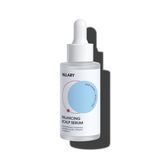
HiLLARY Balancing Scalp Serum
The HiLLARY Balancing Scalp Serum for Oily Scalp is a 50 ml leave-in concentrate specifically designed for use between washes.
|
Key Ingredients (INCI) |
Their Functions |
|
Salicylic Acid 2% |
Gently exfoliates dead skin cells and helps remove accumulated sebum from the scalp's surface |
|
Niacinamide 5% |
Supports the skin's protective barrier and comfort, complementing sebum-regulating care |
|
Zinc PCA 1% |
Helps support balance in oily skin and complements the action of salicylic acid |
|
Hydrolyzed Yeast Protein |
Provides conditioning care for the scalp |
|
Panthenol |
Hydrates and soothes the skin, helping reduce feelings of dryness |
|
Allantoin |
Softens and soothes the skin, making it a useful addition to acid-based formulas |
|
Biotin and Vitamin B6 (Biotin, Pyridoxine) |
Complement a comprehensive scalp care routine |
 Key Benefits:
- Does not weigh down the roots: The lightweight, leave-in texture is designed for targeted scalp application
- Helps maintain a fresh feeling at the roots
- Supports sebum regulation without excessive drying: The exfoliating acid is combined with moisturizing and soothing ingredients
- Applied directly to the scalp: Targets the skin rather than the lengths of the hair
- Recommended course: 3 months
How to Apply Scalp Serum Correctly
- Section your hair. Apply the serum to a clean, dry or slightly damp scalp—not to the hair itself
- Work along each parting, Cover the entire root area rather than applying the product only along your hairline
- Massage gently for 30–60 seconds – Use your fingertips to distribute the product evenly. Gentle massage also helps stimulate local circulation
- Do not rinse – Leaving the serum on the scalp is essential to its leave-in format.
- Frequency: Apply 2–3 times a week after washing your hair
If you have a sensitive scalp, introduce the product gradually, starting once a week. Before the first application, perform a patch test on a small area of skin, as individual sensitivity to the ingredients is possible. Avoid contact with the eyes.
How to Combine the Serum With Other Products
The serum works between washes, but a consistent routine provides the most comprehensive approach: cleanse during washing and support sebum regulation afterward.
|
Your concern |
Complex |
What's included |
|
Oily roots and the need for a complete routine |
Salicylic acid shampoo, conditioner, and balancing serum |
|
|
Scalp buildup and heaviness |
Exfoliating scalp foam, shampoo, conditioner, and serum |
|
|
Oily roots combined with hair shedding |
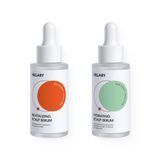
Alternate serums |
Balancing serum and revitalizing serum on different days |
|
Oily scalp accompanied by dandruff |
Alternate serums |
Balancing serum and hydrating serum on different days |
Do not mix the serums together before application. Instead, alternate them on different days.
Who Can Benefit Most From a Balancing Scalp Serum?
- People who wash their hair every day and cannot comfortably skip a day.
- Anyone whose roots lose their fresh appearance by the evening of wash day.
- People who notice residue or a coated feeling on their scalp, even after washing.
- Anyone whose roots lack volume from the moment they wake up.
- People who rely on dry shampoo as an everyday solution.
- Those who want to complement a cleansing shampoo with leave-in scalp care when washing alone is not enough.
Not sure what your hair type is? Start with our article, How to Determine Your Hair Type.
5 More Habits That Help Keep Your Roots Fresh for Longer
- Use warm, not hot, water. Hot water can remove skin lipids more aggressively and may contribute to dryness and irritation.
- Apply shampoo to the scalp only. The lather rinsing through the lengths helps remove everyday residue.
- Apply conditioner and hair masks to the lengths only. Keep them approximately a palm's width away from the roots.
- Avoid touching your hair throughout the day – This is one of the most underestimated contributors to hair looking greasy sooner.
- Change your pillowcase twice a week if your scalp is prone to oiliness.
Learn more about everyday mistakes in our article, 8 Harmful Habits That Can Damage Your Hair.
Frequently Asked Questions
Why does my hair get very greasy?
Hair gets greasy when the sebaceous glands on the scalp produce excess sebum. Common contributing factors include aggressive cleansing that may trigger dryness and irritation, hormonal fluctuations, stress, and a lack of dedicated scalp care between washes.
Why does my scalp get greasy so frequently?
It can become a frustrating cycle: frequent washing with harsh shampoos may dry out and irritate the scalp, while excessive oil removal can contribute to discomfort and an unbalanced scalp condition. You then feel the need to wash your hair even more often. A more balanced approach combines gentle cleansing with appropriate leave-in scalp care.
What can I do to stop my hair from getting greasy so quickly?
Start by changing three things: Apply shampoo to your scalp rather than scrubbing it through the entire length of your hair. Keep conditioner away from your roots. Introduce a leave-in scalp treatment between washes, if appropriate for your scalp. The first two changes cost nothing. The third can involve adding a balancing scalp serum to your routine.
How can I make my scalp less oily?
Avoid trying to strip away every trace of oil. The goal is balance, not maximum cleansing. Ingredients such as salicylic acid can help exfoliate and remove buildup, while Zinc PCA supports oily-skin care and niacinamide and panthenol help maintain skin comfort and hydration.
Can I use a balancing scalp serum every day?
Daily application is not necessary. The recommended frequency is 2–3 times a week after washing. Because the formula contains salicylic acid, using it more frequently may increase the risk of dryness or irritation rather than improve results.
Will the serum dry out the ends of my hair?
The serum is designed to be applied directly to the scalp along the partings, not throughout the lengths. If your hair needs additional conditioning, use a conditioner or hair mask on the lengths, keeping it away from the roots.
How long does it take to see results?
One of the first changes you may notice is a fresher feeling at the roots and, potentially, a longer interval between washes. With regular use, these changes may become noticeable from around weeks 2–3, although individual results vary.