White flakes on a dark sweater that you have to shake off throughout the day. Your scalp itches, and scratching it in public is impossible. A “medicated” shampoo helps for a week, and then everything comes back.
Short answer: dry dandruff on the scalp is the accelerated shedding of skin cells against the background of a disrupted skin barrier. Most often, three things are responsible for this at the same time: excessive activity of the Malassezia fungus, which lives on everyone's scalp, a disrupted protective barrier, and overdrying caused by harsh products. That is why a shampoo that only “washes away the flakes” produces a short-term result — it addresses the consequence.
Below is how to distinguish dry dandruff from oily dandruff, where it comes from, when you need a doctor, and what kind of care delivers lasting results.
What dandruff actually is
Normally, the cells of the scalp epidermis renew approximately every 28 days and shed unnoticed — as individual cells that the naked eye cannot see.
With dandruff, this cycle becomes several times shorter. The cells do not have time to mature and peel off in clumped flakes — these are exactly what we notice on our shoulders.
The acceleration is usually triggered by Malassezia — a yeast-like fungus present on the scalp of practically everyone and normally harmless. It feeds on components of sebum, and its metabolic byproducts can irritate the skin. When the balance of the microbiome is disrupted, the fungus multiplies more actively, and the skin responds with flaking and itching.
An important conclusion: dandruff is not about poor hygiene. Washing your hair more often does not help and often makes things worse because it further damages the barrier.
Dry or oily dandruff: how to tell the difference
This is the first thing you need to determine — your entire care routine depends on it.
|
Characteristic |
Dry dandruff |
Oily dandruff |
|
Flakes |
small, white, dry, fall off easily |
large, yellowish, stick together, adhere to the skin |
|
Scalp |
feels tight, itches, sensation of dryness |
oily, hair becomes greasy quickly |
|
Hair |
dry, brittle, frizzy |
becomes greasy by the very next day |
|
When it gets worse |
in winter, in dry air, after harsh shampoos |
in hot weather, during stress, during hormonal fluctuations |
|
What is needed |
hydration + barrier restoration |
sebum regulation + cleansing |
If your case matches the right-hand column, read the separate article: why hair gets greasy quickly. The rest of this article focuses on dry dandruff.
Why dandruff appears: 7 causes
- A disrupted scalp barrier. When the protective layer is damaged, the skin loses moisture and responds with accelerated shedding. This is the foundation on which everything else develops.
- Aggressive cleansing. Shampoos with harsh surfactants wash away lipids until the hair “squeaks.” The paradox: the more aggressively a person fights dandruff with harsh products, the drier the skin becomes and the more flakes appear.
- Excessive Malassezia activity. Everyone has this fungus, but when the microbiome balance is disrupted, it multiplies more actively and sustains an inflammatory response.
- Dry air and the heating season. In autumn and winter, indoor humidity drops below 30% — the scalp becomes dehydrated, and scalp flaking intensifies during this period in particular.
- Stress and lack of sleep. Elevated cortisol affects the skin's barrier function and immune response, which is why dandruff often flares up during periods of increased stress.
- Hot styling and hot water. Using a hair dryer on the highest setting and excessively hot water further dry out the scalp.
- Lack of dedicated scalp care. Shampoo comes into contact with the skin for less than a minute and is rinsed off. For the remaining 24–72 hours, the skin receives no support at all — yet this is precisely when flaking occurs.
How to identify your cause
|
What you notice |
Likely cause |
What to change |
|
Dandruff + tightness after washing |
Overdrying caused by a harsh shampoo |
Gentler cleansing, moisturizing care |
|
Flare-ups in autumn and winter |
Dry air, indoor heating |
Leave-in hydration, a humidifier |
|
Dandruff returns a week after a treatment course |
The consequence was addressed, not the barrier |
Add care between washes |
|
Flakes + severe itching |
Malassezia activity |
A product containing piroctone olamine |
|
Dandruff against a background of stress |
Cortisol, disrupted barrier |
A regular treatment course, not one-off products |
|
Dandruff + oily roots |
A different type — oily dandruff |
Sebum-regulating care |
|
Dandruff + redness, crusts, pain |
⚠️ Possibly not dandruff |
See a doctor |
When you need a doctor, not cosmetics
Cosmetic care addresses the symptoms of dandruff and the condition of the scalp. However, there are situations in which you need to consult a dermatologist or trichologist:
- pronounced redness, yellow crusts, oozing — may indicate seborrheic dermatitis
- clearly defined affected areas, thick silvery scales — require differential diagnosis
- pain, sores, hair loss in areas affected by flaking
- dandruff does not change after 2–3 months of proper care
- dandruff in a child
Seborrheic dermatitis is a disease, and it is treated by a doctor. Dandruff in the narrower sense is a condition that can be managed with care. The boundary between the two is not always obvious, so when in doubt, the right step is to see a specialist rather than try shampoo after shampoo.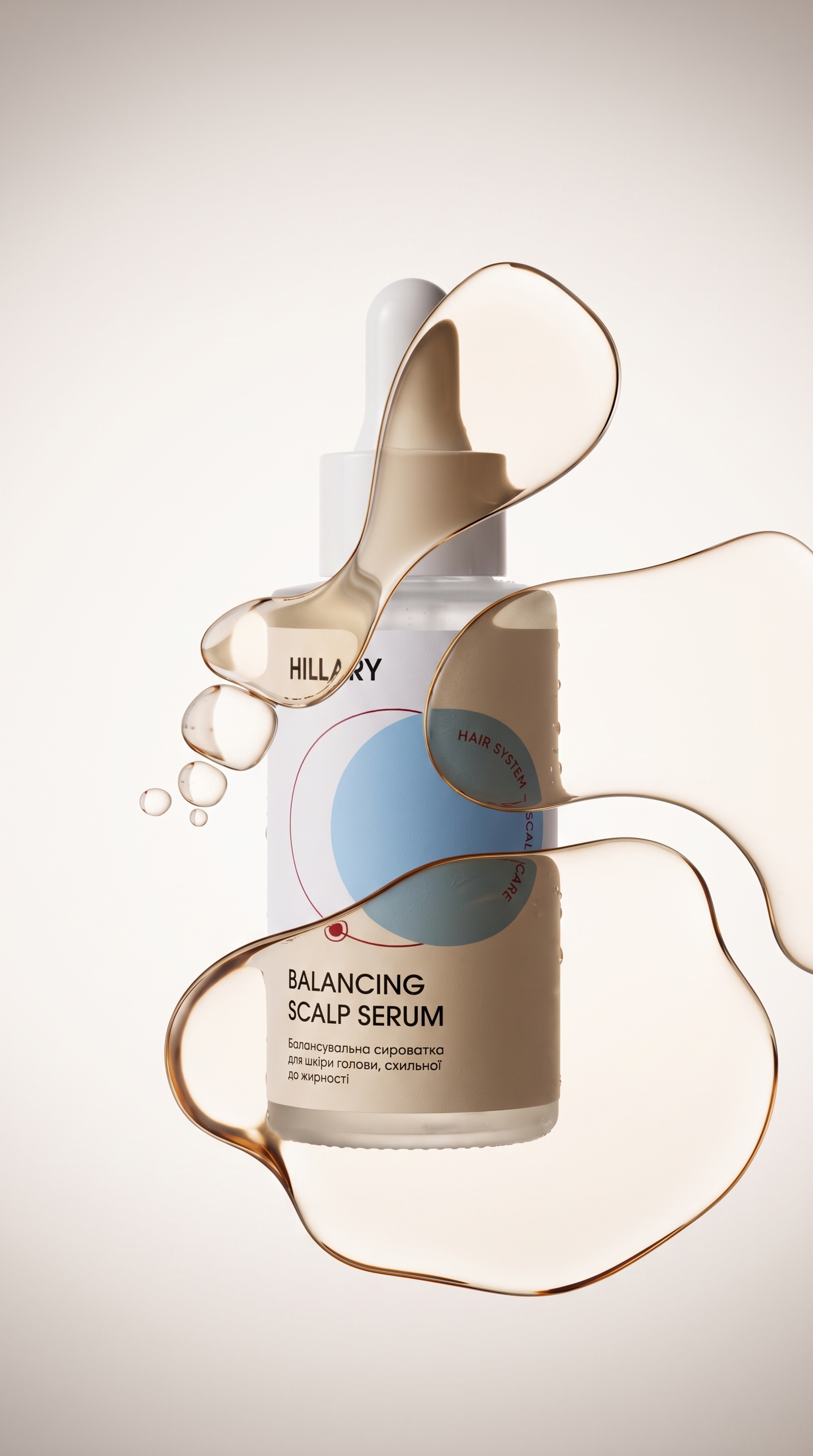
What care works: what to look for in the ingredients
- Piroctone olamine — an ingredient widely used in specialized anti-dandruff products that targets excessive Malassezia activity. In leave-in products, its concentration is limited by regulations, so 0.1% is the maximum permitted for a formula that is not rinsed off.
- Probiotic and postbiotic ingredients (Lactobacillus Ferment Lysate) — support the protective barrier and a balanced skin condition. This is the part that helps prevent dandruff from returning immediately after a treatment course.
- Humectants (Saccharide Isomerate, glycerin, panthenol) — retain moisture and relieve tightness.
- Soothing extracts (chamomile) — reduce discomfort.
What to avoid with dry dandruff: products with a high concentration of alcohol listed first in the ingredients, harsh sulfate surfactants, and daily washing until the hair “squeaks.”
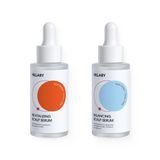
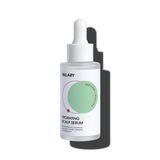
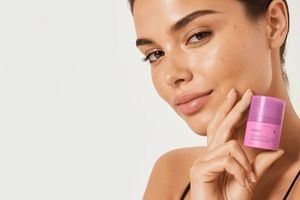
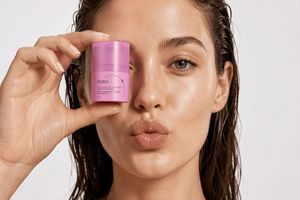
Moisturizing serum for a dandruff-prone scalp — a 50 ml leave-in treatment designed for use between washes.
|
Ingredient (INCI) |
What it does |
|
Piroctone Olamine 0.1% (Piroctone Olamine) |
A key ingredient for a dandruff-prone scalp; targets the symptoms of flaking |
|
Lactobacillus Ferment Lysate 4% (Lactobacillus Ferment Lysate) |
A biotechnological ingredient; supports the protective barrier and a balanced skin condition |
|
Saccharide Isomerate (Saccharide Isomerate) |
Retains moisture and reduces the feeling of dryness and tightness |
|
Panthenol (Panthenol) |
Moisturizes and soothes, helping maintain skin comfort |
|
Chamomile Extract 2% (Chamomilla Recutita Flower Extract) |
Gentle care for skin prone to dryness and discomfort |
|
Vinegar (Vinegar) |
Helps maintain the proper condition of the scalp |
Benefits:
- works from two angles: piroctone olamine — targets the symptoms, lactobacilli — support the barrier
- the leave-in formula remains on the skin until the next wash
- moisturizes rather than overdrying — unlike most anti-dandruff products
- is applied directly to the scalp, not along the hair lengths
- recommended course — 3 months
How to apply the serum correctly
- Part your hair into sections. Apply to a clean, dry or slightly damp scalp
- Work part by part, covering the entire surface, not just the hairline
- Distribute with gentle massaging movements using your fingertips
- Do not rinse out
- Avoid contact with the eyes and application to irritated areas
- Course — 3 months, on a regular basis
Before the first use, perform a test on a small area of skin: individual sensitivity to the ingredients is possible.
How to combine the serum with other products
|
Your situation |
Routine |
What it includes |
|
Dry dandruff, a complete routine is needed |
Anti-dandruff routine |
polynucleotide shampoo, conditioner, moisturizing serum |
|
Dandruff + buildup on the scalp |
Deep cleansing |
scalp exfoliant once a week + serum |
|
Dandruff + hair loss or reduced hair density |
Alternating serums |
moisturizing + revitalizing, on different days |
|
Dandruff + dry, damaged hair lengths |
Care for the hair lengths |
serum on the scalp + hair mask on the lengths |
Do not mix serums before application — alternate them on different days.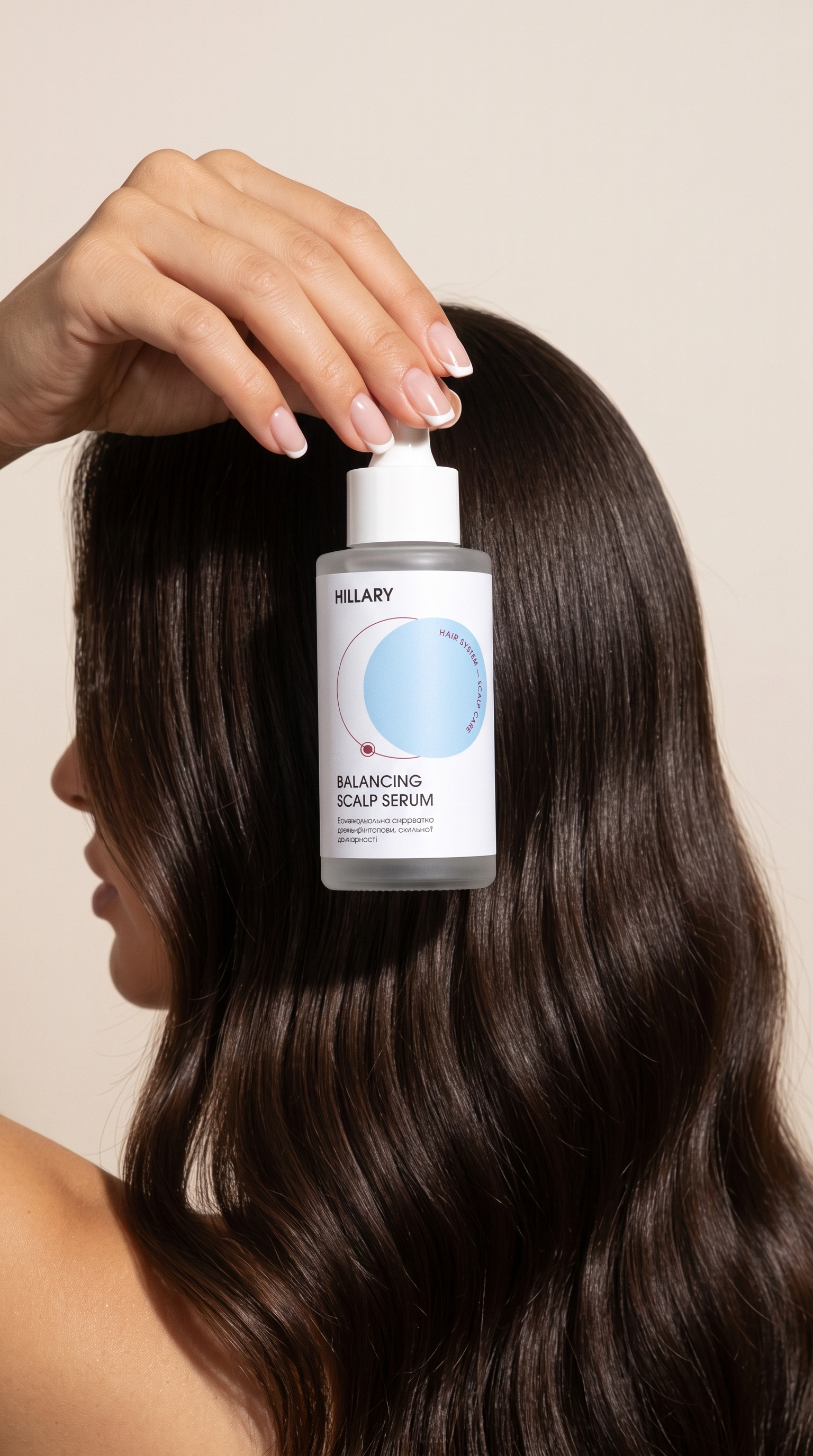
Who needs the serum most
- when there is visible flaking and flakes on clothing
- when the scalp feels dry and tight
- when dandruff returns after every course of medicated shampoo
- with occasional itching and discomfort
- during the heating season, when flaking intensifies
- as a leave-in addition to anti-dandruff shampoo
If you are unsure about your scalp type, start with the article “How to determine your hair type”.
5 more habits that will reduce flaking
- Warm, not hot, water — hot water destroys the lipid barrier the fastest
- Do not scratch your scalp — mechanical irritation increases flaking
- Use a humidifier during the heating season — humidity of 40–60%
- Use a hair dryer on a medium setting, not the highest setting, and do not hold it too close to the skin
- Do not apply conditioner to the roots — product buildup changes the scalp environment
Read more about everyday mistakes in the article “8 harmful habits for your hair”.
Questions and answers
What causes dandruff on the scalp?
It results from a combination of three factors: a disrupted skin barrier, excessive activity of the Malassezia fungus, and external influences — aggressive cleansing, dry air, and stress. Dandruff is not related to poor hygiene, and washing more often does not reduce it.
Why does dandruff appear?
The scalp cell renewal cycle becomes shorter, and the cells shed in clumped flakes before they have time to mature. The most common trigger is an imbalance in the scalp microbiome.
How can you get rid of dandruff on your scalp?
It is more accurate to say not “get rid of it forever” but “keep it under control”: dandruff tends to return if you stop your care routine. An effective approach involves gentle cleansing, leave-in care between washes, and consistency for at least three months. If nothing changes during this time, you need to consult a dermatologist.
What should you do if dandruff appears on your scalp?
First, determine the type — dry or oily — because the care routine differs. Next, eliminate factors that cause overdrying: excessively hot water, harsh shampoo, and daily washing. Then add leave-in care that works between washes.
Which vitamin are you lacking if you have dandruff?
Dandruff is most often associated with deficiencies in B vitamins, vitamin D, and zinc; however, there is no direct cause-and-effect relationship in every individual case. A deficiency can only be assessed through tests — you should not prescribe supplements “for dandruff” to yourself without an examination. Cosmetic care works externally and does not affect deficiencies.
Can the serum be used together with anti-dandruff shampoo?
Yes, they work at different times: shampoo works during washing, while the serum works between washes. These are complementary steps, not alternatives.
How long will it take for results to become noticeable?
A feeling of comfort and reduced tightness usually appear first, within 1–2 weeks. A visible reduction in flaking occurs approximately from the third or fourth week. The course is designed for 3 months because the skin barrier cannot recover any faster.