Hair on the pillow, in the drain, on the sweater, and on the brush. It seems there is noticeably more of it than in summer, and the first thought is usually worrying.
The short answer: yes, hair really does shed more actively in autumn, and this is a physiological norm. Normally, a person loses 50–100 hairs per day, and during the seasonal period this figure may increase to 150. This usually lasts 6–10 weeks and goes away on its own.
The warning sign is not shedding itself, but lasting more than three months, noticeable widening of the part, or the appearance of visible gaps. Below is how the hair growth cycle works, how to check yourself at home, when a doctor is needed, and what actually supports hair during this period.
How the hair growth cycle works
Each hair follows its own schedule and passes through three phases:
- Anagen – the growth phase. Lasts from 2 to 7 years. Approximately 85–90% of the hair on the head is in this phase.
- Catagen – the transitional phase. About 2–3 weeks: growth stops, and the follicle shrinks.
- Telogen – the resting phase. 2–4 months. The hair no longer grows and is held in the follicle mechanically until a new hair pushes it out.
Normally, the phases are not synchronized: neighboring hairs are at different stages, so shedding is inconspicuous and uniform.
Seasonal shedding occurs when a large group of follicles enters the telogen phase at the same time. After 2–4 months, they “release” their hair together, and we see this as a sharp increase in shedding.
Why shedding increases specifically in autumn
The key is that 2–4 months pass between an event and its consequence. What happens in October was “programmed” back in summer.
- Summer sun. UV radiation affects the scalp and follicles. Most follicles that entered telogen in July release their hair in September–October.
- Salt and chlorinated water, heat. Additional stress on the scalp throughout the season.
- Change in daylight duration. Seasonal fluctuations affect the hormonal background and the hair cycle – this is one of the hypotheses used to explain the evolutionary “link.”
- Returning to a busy routine. September means stress, lack of sleep, and changes in diet. Cortisol can shift follicles into telogen.
Important: seasonal shedding is the loss of hair that has already completed its cycle. The follicle remains alive and capable of growing a new hair.
How much hair shedding is normal and how to check yourself
Normal: 50–100 hairs per day. During the seasonal period – up to 150. It is difficult to estimate by sight, so there are two approximate methods.
Method 1. Counting over a day.
Throughout the day, collect the hair left on the brush, in the drain, on the pillow, and on clothing. Repeat for three days in a row and calculate the average. Consistently more than 150 is a reason to take a closer look.
Method 2. Simple pull test.
On unwashed hair (on the second or third day), take a small section – approximately 50–60 hairs – and gently run your fingers from the roots to the ends without tugging. Normally, 2–5 hairs remain in your hand. If there are consistently more than 6–8, shedding is active.
These tests are approximate. They show a trend, not a diagnosis.
Seasonal or not: how to tell the difference
|
What you notice |
It is likely |
What to do |
|
Increase in September–November, lasting 6–10 weeks |
Seasonal shedding |
Supportive care, observation |
|
Hair falls evenly from the entire head |
Telogen shedding |
A 3-month care course |
|
Continues for more than 3 months without slowing |
⚠️ Not seasonal |
See a trichologist |
|
The part has become noticeably wider, or gaps have appeared |
⚠️ Possible androgenetic alopecia |
See a doctor; diagnosis is needed |
|
Shedding began 2–3 months after illness, childbirth, or dieting |
Telogen shedding |
It will resolve on its own; care speeds up recovery |
|
Shedding + flaking, itching, redness |
⚠️ Scalp condition |
Address the scalp condition first |
|
Hair does not fall out but breaks along its length |
This is not shedding |
Care for the lengths, not the scalp |
The last situation occurs more often than it may seem: if the hairs are short and have no white bulb at the end, they are breaking rather than falling out. In that case, protein care for the lengths will help, not products for the roots.
When a doctor is needed
Cosmetic care supports the scalp and hair, but does not replace diagnosis. You should see a trichologist or dermatologist if:
- shedding continues for more than 3 months without a tendency to decrease
- the part is widening, or areas with noticeably thinner hair appear
- shedding is accompanied by flaking, pain, or redness of the scalp
- patches with complete absence of hair have appeared
- shedding began suddenly and without an obvious cause
- there are accompanying symptoms: brittle nails, weakness, weight changes – tests are needed
The doctor will assess ferritin, vitamin D, thyroid hormones, and the androgen profile. No cosmetic product affects these indicators.
What actually supports hair during the seasonal period
- Saw palmetto extract – one of the most popular plant-based ingredients in anti-shedding products; supports the normal hair growth cycle.
- Peptides with biotin derivatives (biotinoyl tripeptide) – work with hair structure and its anchoring near the root.
- Flavonoids and plant acids (apigenin, oleanolic acid) – support the follicle’s microenvironment and scalp balance.
- Biotechnological ingredients based on plant cells – support the environment for normal follicle function.
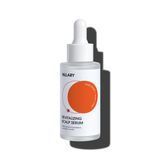
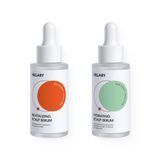
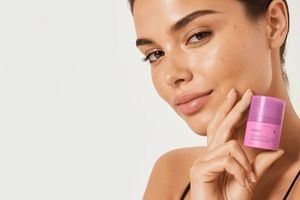
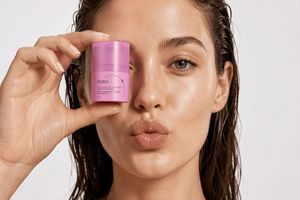
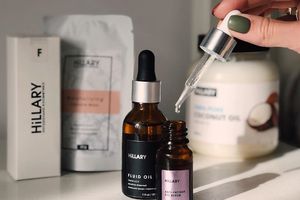
Hillary Revitalizing Scalp Serum – a concentrated leave-in treatment, 50 ml, for hair prone to shedding, weakening, and loss of density.
|
Ingredient (INCI) |
What it does |
|
Saw palmetto fruit extract 5% (Serenoa Serrulata Fruit Extract) |
A popular ingredient in anti-shedding products; supports the normal hair growth cycle |
|
Turmeric stem cells 2% (Curcuma Longa Callus Conditioned Media) |
A biotechnological ingredient; supports the environment for hair follicle function |
|
Biotinoyl tripeptide (Biotinoyl Tripeptide) |
A peptide with a biotin derivative; supports hair structure and its anchoring near the root |
|
Apigenin (Apigenin) |
A plant flavonoid that supports the follicle’s microenvironment |
|
Oleanolic acid (Oleanolic Acid) |
Complements the complex and supports scalp balance |
|
Moisturizing complex (glycerin, propylene, butylene, and pentylene glycol) |
Supports comfort and scalp hydration |
Benefits:
- Leave-in format – works for 2 hours or overnight, not just 30 seconds
- three active approaches in one formula: saw palmetto, peptide complex, and biotechnological ingredient
- light texture, spreads along the partings without weighing hair down
- recommended course – 3 months, exactly as long as one observation cycle lasts
How to apply the serum correctly
- Divide the hair into sections and apply the serum directly to the scalp along the partings
- Gently massage the root area with your fingertips
- Leave it on for at least 2 hours, or preferably overnight
- Do not rinse
- Frequency: 2–3 times a week, after washing
- Course – 3 months regularly
Before the first use, perform a test on a small area of skin. Avoid contact with the eyes and applying it to irritated skin.
How to combine the serum with other products
|
Your situation |
Routine |
What it includes |
|
Shedding; a full cycle is needed |
Anti-shedding routine |
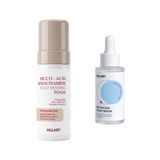
polynucleotide shampoo, conditioner, revitalizing serum |
|
Shedding + buildup on the scalp |
Deep cleansing |
scalp exfoliator once a week + serum |
|
Shedding + oily roots |
Alternating serums |
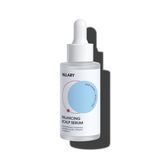
revitalizing + balancing, on different days |
|
Shedding + dandruff |
Alternating serums |
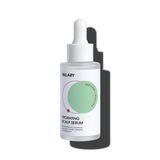
revitalizing + moisturizing, on different days |
|
Shedding + breakage along the lengths |
Roots and lengths |
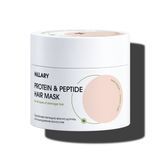
serum on the scalp + protein mask on the lengths |
Serums are not mixed before application – they are alternated on different days or separated into morning and evening.
Who needs the serum most
- during seasonal shedding in autumn and spring
- for weakened, thin hair that has lost density
- when there is a noticeable loss of ponytail thickness
- after stressful periods, illness, or a strict diet
- for regular support of the scalp and roots
- for those who want to support the natural hair growth cycle
If you are unsure whether your hair is shedding or breaking, read how moisturizing differs from nourishing and repairing.
5 more habits for the seasonal shedding period
- Do not tie your hair tightly – tension adds mechanical stress to the follicles
- Brush hair when it is partly dry, not wet, starting at the ends
- Massage the scalp for 2–3 minutes while washing – improves microcirculation
- Do not wash your hair with very hot water – it dries out the scalp
- Watch your diet: protein, iron, and zinc are building materials for hair
More about everyday mistakes in the article “8 harmful habits for your hair”.
Questions and answers
Why does hair fall out in autumn?
Because a large group of follicles enters the resting phase at the same time. This is mainly triggered by summer factors – sun, heat, salt water – and the effect appears 2–4 months later, that is, in September–November.
When does hair most often fall out?
There are two seasonal peaks: autumn (September–November) and a less pronounced one in spring. The autumn peak is usually more noticeable because it follows summer stress on the scalp.
How long can seasonal hair shedding last?
Usually 6–10 weeks. If active shedding continues for more than three months without a tendency to decrease, it is most likely not seasonal, and you should see a trichologist.
What helps with severe hair shedding?
First, the cause must be identified: seasonal telogen shedding, deficiencies, hormonal disorders, or breakage mistaken for shedding. For seasonal shedding, regular supportive scalp care for a course of at least three months may help. For other causes, cosmetics do not replace treatment.
Which vitamin is lacking when hair sheds heavily?
Hair shedding is most often associated with deficiencies in iron (ferritin), vitamin D, zinc, and B vitamins. However, a deficiency can only be identified through tests – you should not prescribe “anti-shedding” supplements to yourself without examination. Cosmetic care works externally and does not affect deficiencies.
Can seasonal shedding be stopped?
The physiological process cannot be stopped completely – hair that has completed its cycle will fall out anyway. But you can support the scalp and follicles so that new hair grows stronger and shorten the recovery period.
How long until the serum results become noticeable?
Hair grows approximately 1 cm per month, so changes cannot be assessed earlier than 8–12 weeks. That is why the course is designed for 3 months. The first thing usually noticed is a decrease in the amount of hair on the brush and pillow.